Two New Additions to The Blue Zone Series…

Tape Dreams GUITape Dreams is a double offering with a common theme…

Controlled distortion is something that absolutely fascinates me and is something I’ve been exploring for a number of years now and is very much part of my sound. Guitarists have drawn apon the potential musicality and movement imparted by complex distortion for decades, but it often surprises me how its potential is often overlooked when it comes to synthesis.  There are many forms of distortion and the complex interplay between input source material and all number of non-linear effects in controlled situations can be very beautiful.

For me, more often than not, I use tube circuits and analog effects to manipulate source material but increasingly I’m becoming very interested in what analog tape has to offer…

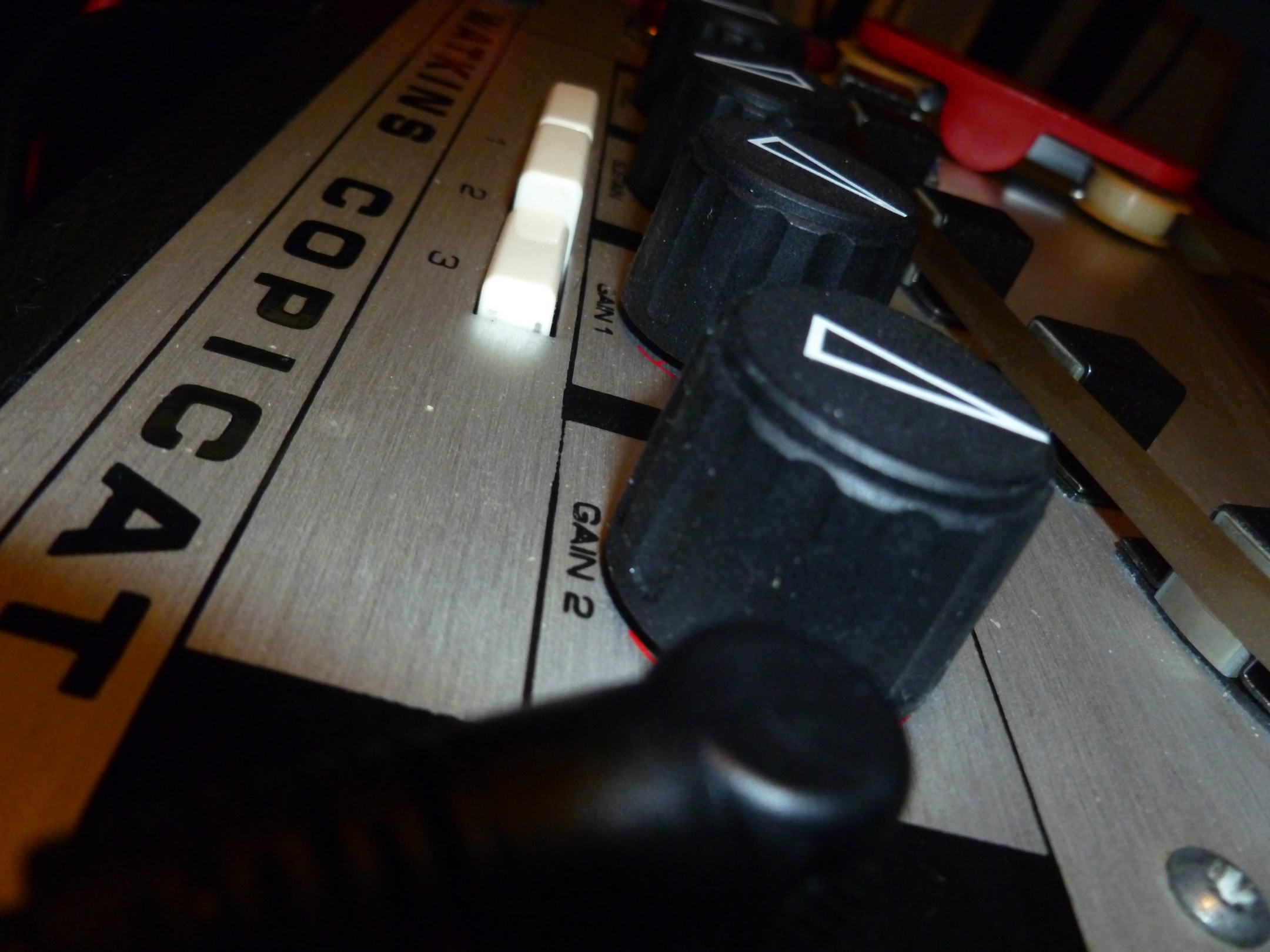
Tape and ReelArmed with a gorgeous 1967 Revox G36 all tube half track which I fixed up last year and a Watkins Copicat which I totally rebuilt from a wreck I set about trying out two concepts…

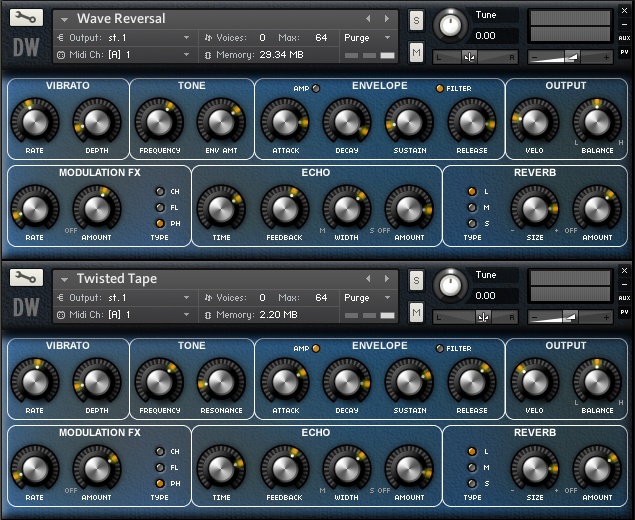
The first sound I’ve called Twisted Tape and was made by feeding a slow PWM wave from a CS01 into the Copicat for a few seconds and then pulling the (delightfully worn out!) tape loop away from the erase head and muting the input signal thus leaving a continuous loop of lumpy saturated organic goodness – how typically analog! – it started off as a cold PWM pulse train and is almost flute like off tape.

Wave Reversal was made by recording an arpeggiated effect and blending it with some other source material of mine. Several seconds of the resulting composite was then recorded fairly hot onto the Revox at 7.5 IPS, the tape was reversed and then played backwards at 3.25 IPS. The sound was then transposed down a further octave. Several long loops were created in Kontakt and a random round robbin configured to trigger them.
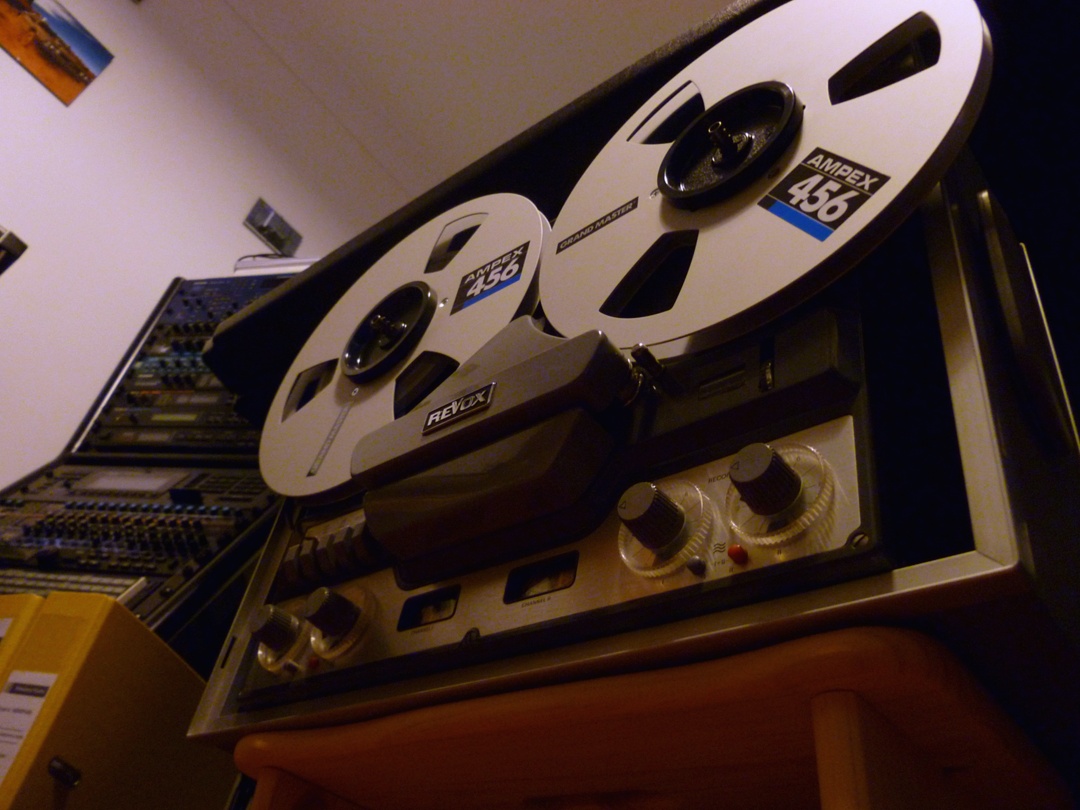
Hideaway_Revox_G36


Credits

D.A.Wilson (Hideaway Studio) Equipment Restoration & Sound Design

Stephen Howell (Hollow Sun) GUI Design & Graphics

Mario Krušelj TBZ Engine Script

HS-4KL-BZ10 (12/04/13)
A New Addition to The Blue Zone….

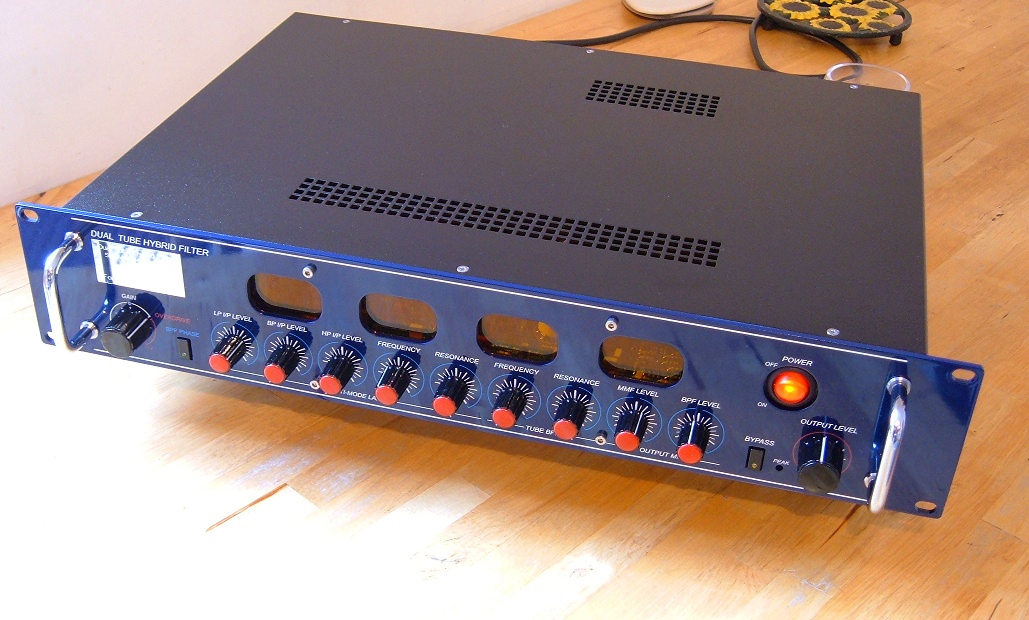
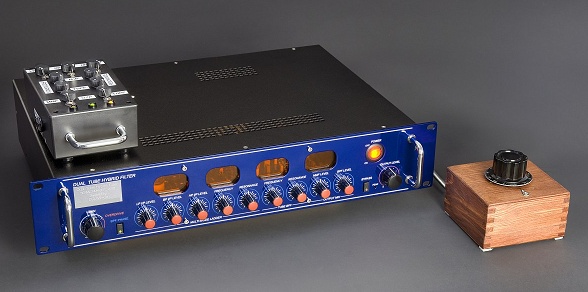
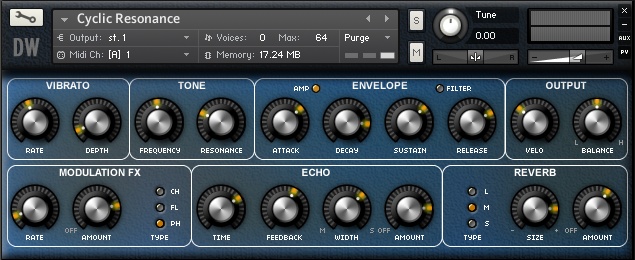
Cyclic ResonanceCyclic Resonance is another very organic offering made by creating two lightly filtered wave sequences on a Waldorf Microwave I and feeding them into the Dual Tube Hybrid Filter where both the tube BPF and multimode filter stages were in near resonance with both cutoff CV channels modulated by an LFO. The filter gets caught up in the harmonics as the LFO sweeps across the hot spots and also has the effect of accentuating the inherent noise in a nice way…


Dual Tube Hybrid Filter II

Credits
D.A.Wilson (Hideaway Studio) Equipment & Sound Design

– Stephen Howell (Hollow Sun) GUI Design & Graphics

– Mario Krušelj TBZ Engine Script

HS-4KL-BZ09 (06/04/13)

“Just taken ‘Cyclic Resonance’ for a test drive and love it. The sound has a exceptional natural purity and yet maintains its ‘other worldly’ electronic character. Great work Dan, another wonderful and extremely useful addition to the ‘Blue Zone’ catalogue.”
Pete Tytler

“If you own Native Instrument’s Kontakt version 4 or higher you may want to check out some of the beautiful instruments Dan has created. They are exceptional for pads and ambient music in general..  They are reasonably priced and have been really professionally crafted.”  Bobbotov, ambientonline.org

“I am in love with the Blue Zone Series, it has very lovely nuances, and just kinda works all by itself, even a single note.. There is a purity in your signal, its liquid smooth and subtle like wind…. and brings a sense of peace that normal synth pads haven’t in a long long time.”
Forrest Gore aka vaisnava www.atmastudios.com

Hideaway Studio Presents: Monopolyphonix…

MP_Layering_EngineMonopolyphonix was in many ways a celebration of another successful resurrection of an old classic saved from the grave. Much like the Minimoog, ARP Omni-2 and Novachord left their sonic fingerprints on S-VX and The Orbitone Collection, a recently restored Farfisa Syntorchestra manufactured in 1974, gave its all to the creation of Monopolyphonix…

Why the name? Well the Syntorchestra comes from a strange era quite early on in the history of affordable portable synthesizers where manufacturers were quite experimental and tended to do their own thing. This was especially the case with early polyphonics. The net result is that weird and wacky user interfaces and synth architectures were quite the norm in those days!

1974 Farfisa SyntorchestraWhat makes the Syntorchestra quite unusual is that it features a complete polyphonic divide down section running in complete isolation in parallel with a basic monosynth each of which capable of producing similar timbres. This is quite unlike the paraphonic synth sections of the ARP Omni for example. The result is a rather odd combination of the perfect pitch characteristics of a polyphonic divide down synth beating, phasing and interacting with the far from perfect pitch tracking of a monophonic synth. With some careful front panel tweaking the two sections can be brought together to produce a surprisingly big sound. It also boasts one of the warmest analog synth pianos I think I’ve ever heard. It’s a very basic sound but really quite beautiful through reverb. The monophonic section can produce an array of chime, twang and almost Theremin type timbres too.

I was really very keen from the start not to let this library turn into yet another virtual offering of an old classic and therefore treated the instrument more as the raw material for an array of new sounds that reached beyond the original.


More Details & Purchase via Kontakt Hub


Equipment Used:

All sample material captured from a recently restored 1974 Farfisa Syntorchestra. Analog Chorus Unit, RME Fireface.

Download Contents:

•165 generously long 24-bit samples
•16 multi-sampled voices/partials
•4-Voice Layering Engine with ability to save
•34 editable example instrument patches
•12 example layered multi patches
•User Manual

System Requirements:

•Requires Kontakt version 4.2.4 or higher
•Around 250Mb Free Hard Disk Space

Credits

D.A.Wilson (Hideaway Studio) Synth Restoration, Sound Design, Sample Set & Example Instruments. Stephen Howell (Hollow Sun, RIP) Layering Engine Concept, GUI Design & Graphics. Mario Krušelj Layering Engine Script

HS-K4L-A005 V1.01 01/04/13

© D.A.Wilson, Hideaway Studio 2013HideawayStudioLogo

A New Addition to The Blue Zone: Sustained Infinity…

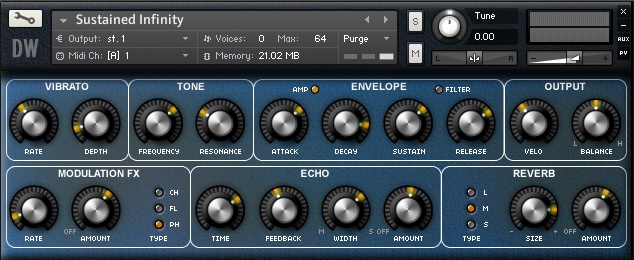
Sustained Infinity GUI

Sustained Infinity was made by hooking up a Watkins Copicat into a mixer and feeding its output back into the tape delay input but mixed in with a tone from a Minimoog model D to excite it into frequency controlled feedback by tweaking the EQ on the mixer in the regen path. The sliders were ridden to slowly entice and sustain feedback and then carefully held off everything descending into chaotic madness.  Three takes were made and transposed down by several octaves in Kontakt and looped on a random round robin.

Please note there is occasional clipping – the beast was very much tamed by hand and proved almost impossible to prevent completely.

The Blue Zone is a progressing series of experimental instruments released by Hideaway Studio in installments for Kontakt 4.2.4 and above.


Infinity Tape
“This one is too beautiful….absolutely lovely sound”  DavyAch, KVR Forum

Credits

D.A.Wilson (Hideaway Studio) Sound Design, Sample Set, Patch, Multi & Demo

Stephen Howell (www.hollowsun.com) GUI Concept, GUI Design & Graphics.

Mario Krušelj Synth Engine Script

HideawayStudioLogo

HS-4KL-BZ08 (23/03/13)

Two New Additions to The Blue Zone Series

Here are two new additions to The Blue Zone Series:   Tri-Phased Intervals and Water Strings

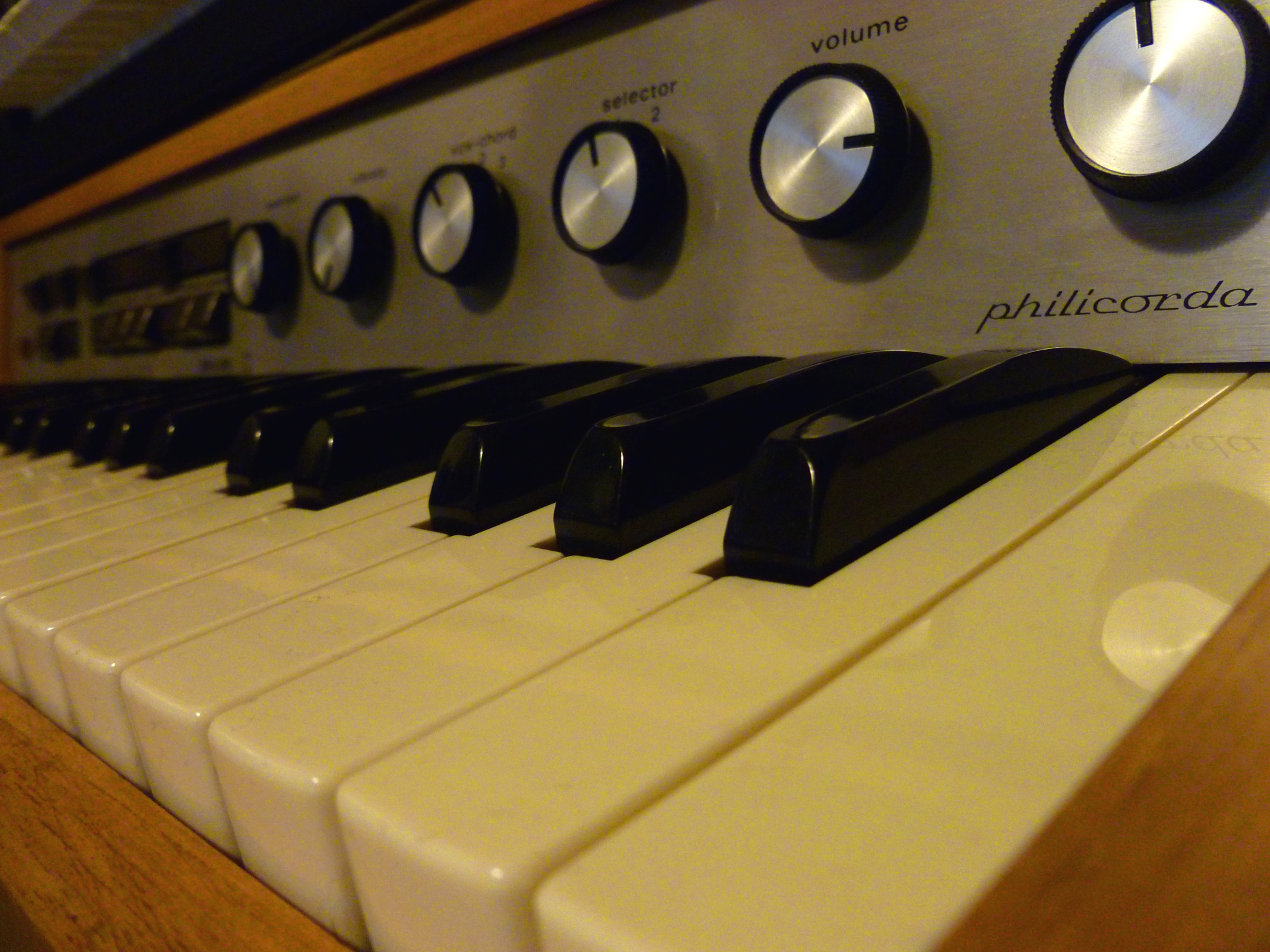
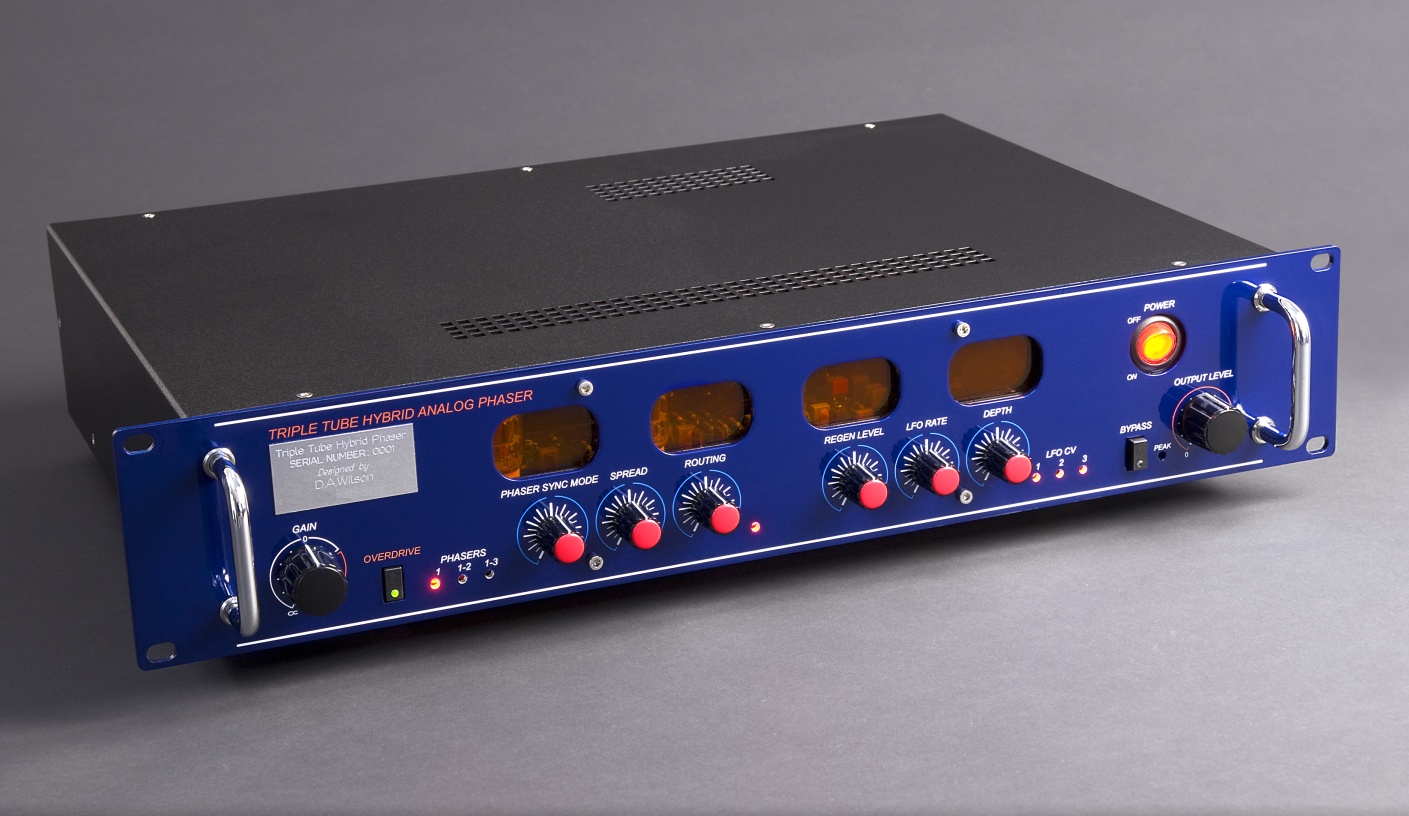
Tri-Phased Int GUI Tri-Phased Intervals was made by feeding a late 1960’s Philicorda GM751 into the Triple Tube Hybrid Phaser – then capturing long samples across five octaves and transposing down and resampling as bailed intervals.  One of only three examples world wide, the Triple Tube Hybrid Phaser is something I conceived a couple of years ago and is an analog processor with a particularly convoluted signal path.  This unique design is in effect three overdriven tube buffered 4-stage analog phaser blocks fed and tapped in a complexHideaway GM751 series parallel chain with tube mixing and multiple feedback paths.  A complex triple LFO generator permits a variable phase spread between each phaser block which permits anything from a deep plunging effect to swirly heaven.   The phaser was setup for maximum swirl and the resulting signal was passed through an analog chorus.  Hideaway Studio_Triple Tube Hybrid Analog PhaserEach captured sample was looped and set to start at random positions in the phaser cycle.  The result is pure organic swirl!

For instant gratification simply plug in your favourite sustain pedal and play an enormous chord… for the next 10 minutes whilst you’re teleported to another place!


“Holy cow that sounds good!”  nofrets, KVR Forum

Play a Big Chord and Sustain…

Moonlight Snow:  A demo of the layered multi bundled with Tri-Phased Intervals…

Water Strings is a multi-sampled composite of various analog sources including the Water Mixer concept (see below), 1938 Novachord #346 and Vocal Resonators – spanning over 75 years of audio technology!  Although there is no doubting the Novachord is a pretty special and historically instrument as is, it is also a superb source of sample material for interesting new and organically loaded sounds!

The Deep Blue:  A demo of a Layered Multi from the Water Strings Download in Action…

TEQ9B Glow

HideawayStudioLogo

Hideaway Studio Proudly Presents: The Pentodian Resonator Choir

ThePentodianChoir_GUI A selection of twelve unique synthetic choirs made up of 215 hand crafted vocal formants. At least 50% of the samples in this collection were created using little more than a handful of discrete circuits and vintage lab gear all processed with vintage classic analog and tube technology and brought together in the same proven 4-voice layering engine as the Orbitone library….

Passive L/C Resonator Formant Circuits based on the 1938 Novachord….

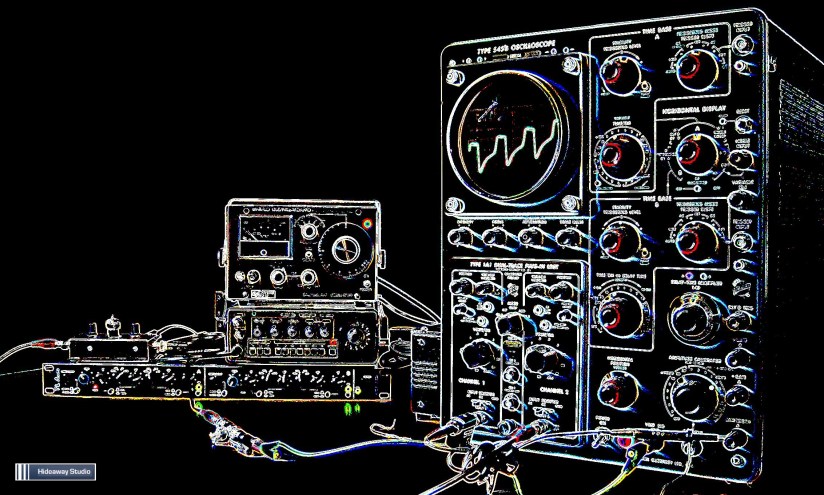
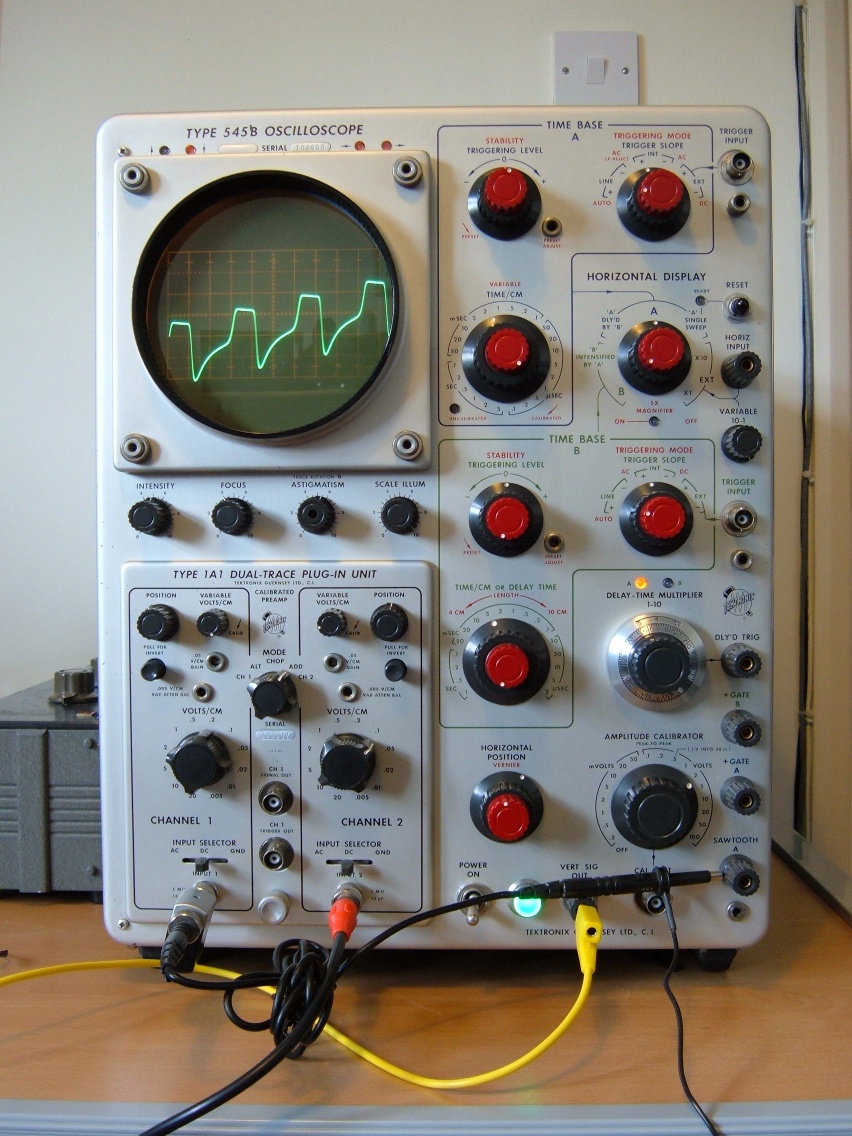
NC346 ResonatorsThe Celestial Choirs featured in The Pentodian Choir started off life as little more than a series of short pulses created by an old hand-configured analog lab signal generator. The frequency of the pulse train was gently modulated using the swept oscillator function to act as a vibrato. The pulses were converted into exponential ramps using a passive wave shaper circuit similar to those found in early string synths and the resulting sawtooth fed into a Triple Passive L/C Resonator circuit based on the 1938 Novachord formant resonator section. This is little more than three coils of wire and three capacitors! The resulting waveform was then impedance buffered using the entire vertical signal path of a 1968 Tektronix 545B tube oscilloscope! The output from the vertical signal output socket was then fed into a prototype tube overdrive unit and into a tube equaliser.

Novachord ResonatorWell over 100 samples were painstakingly captured by hand configuring the equipment for each note and then sampling the results. The samples were further EQ’d and loaded into multi-samples.

Some of multi-samples were further processed with an analog chorus unit.

Polymoog Formant Resonators…

DW Rehoused Polymoog Resonator cropped

Two of the choirs were created by feeding the brass organ stop from a 1972 Eminent 310U into a rehoused 1978 Polymoog Resonator Section. This proved remarkably effective and a similarly successful choir was made by feeding a string patch from a Matrix 1000 into the resonator. A third choir was the result of recording the previous results hot onto a 1967 Revox G36 tube tape machine and resampling.

The Vox Box…

HideawayStudio_VoxBoxProto

A curious solo vocal effect was created using a prototype concept consisting of a triode based relaxation oscillator feeding a passive L/C resonator passed into a tube band pass filter modulated by the same LFO as the pitch vibrato.

Equipment Used:

Hand configured analog pulse signal generator modulated by LFO, DIY Passive pulse to exponential wave shaper circuit, DIY Passive Triple L/C Formant Resonator Circuit based on 1938 Novachord impedance buffered with Y-amplifiers from a 1968 Tektronix 545B tube scope! DIY Tube Overdrive, 1972 Eminent 310U fed into rehoused 1978 Polymoog Formant Resonator Section, prototype analog chorus, 1967 Revox G36 tube half track tape machine, prototype Tube VoxBox, Hideaway Studio TEQ-9B Active 9-Band Gyrator Tube EQ, TL Audio EQ-2011 Tube EQ.


More Details & Purchase via Kontakt Hub

“I love the The Pentodian Resonator Choir library. I thought it would be good, but I seem to be reaching for it every time I need a choir-like sound at the moment.”   Shangsean, KVR Forum

“Pentodian Resonator Choir … Love it, absolute no brainer!!”  don1thedon, KVR Forum

“Love this thing, and not the first I bought from Hideaway and really clicked with it straight away. Keep up the good work!”  Vicshere, KVR

Download Contents:ThermionixSetup_FX3
•215 generously long 24-bit samples
•12 hand made multi-sampled resonator choirs
•4-Voice Layering Engine with ability to save
•12 editable example instrument patches
•8 example layered multi patches
•User Manual

System Requirements:
•Requires Kontakt version 4.2.4 or higher
•Around 500Mb Free Hard Disk Space

Credits

D.A.Wilson (Hideaway Studio) – Equipment Design, Sound Design, Sample Set & Example Instruments. Stephen Howell (Hollow Sun, RIP) – Layering Engine Concept, GUI Design & Graphics. Mario KrušeljLayering Engine Script

Usage Restrictions & Copyright Notice (see below)

HideawayStudioLogoHS-4KL-A004 V1.01 (09/02/13)

A Bundle of Two New Ones For the Blue Zone Series…

This week’s offering comes in a double helping under the general title of Choppersphere… (black, for arpeggiated and wavesequenced fx)

Type 545B Chopper

Tek 1A1 PluginThis is made up of two main instruments…  a curious arpeggiated effect called Type 545B Chopper and  a  warm pad called Composite Chorus and comes in two example forms (Strings) and (Hall Pluck).  There are also three multis in the download:  Choppersphere, Super Hall Pluck and Sustained Hall Pluck.

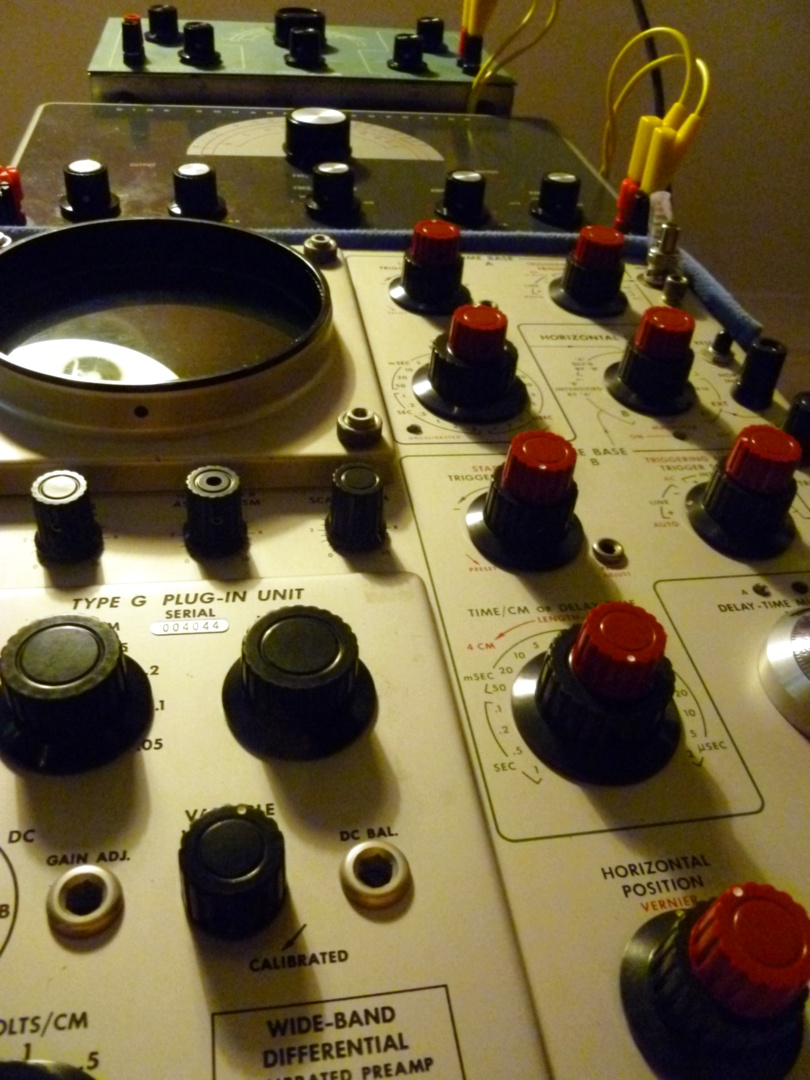
Type 545B Chopper was the result of one of my more experimental sessions.    The raw sample data was made in a rather bizarre manner by feeding a basic waveform into channel #1 of a 1968 Tektronix 545B tube scope and setting it up to trigger on it.  This resulted in the sawtooth generated by the timebase being in sync with the incoming waveform which was promptly fed back into channel #2 on the scope.    The Type 1A1 plug-in unit was then set to chop mode whereby the two input signals were alternately chopped to create a complex waveform syncronised to the external signal.   The trigger level was then slowly tweaked resulting in a very unusual signal ending up on the vertical signal output.   This was captured and several seconds of sample was programmed up to fire on random round robins with different sample starting points on each.   The harmonically rich waveform was then filtered randomly and a  simple arpeggiator patch setup to sequence the whole thing.1968 Tek 545B Tube Scope

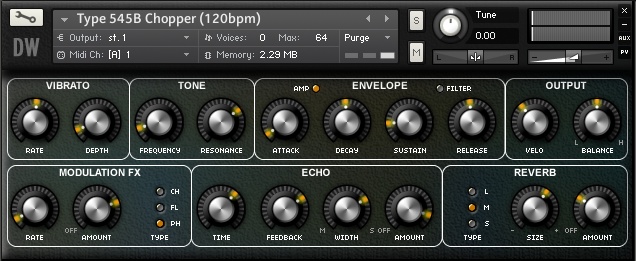
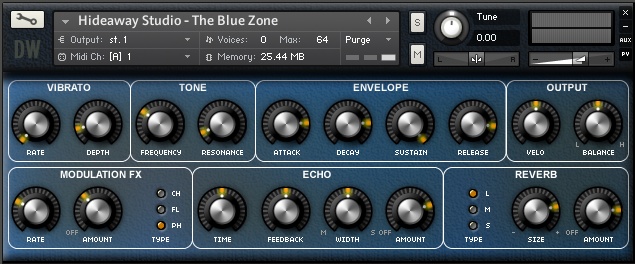
The delay in the default instrument has been configured to run at 120 bpm – this can be tweaked in the GUI to gain the desired effect at any bpm set in Kontakt.   It is quite entertaining to hold down some notes and start tweaking the filter cutoff, filter amount and filter decay settings as well as just about everything else on this one!

The second instrument in the choppersphere download is called Composite Chorus (a red one!) and is based on a composite of a number of string like timbres layered and fed through an analog chorus unit.

Both sounds can be played together and indeed layered with any other sound in the Blue Zone Series.

Tek 545B Chopper Waves

Type 545B Chopper:  firstly played in its default state and then continuously tweaked:

Sustained Pluck:  one of three example multis in the Choppersphere download:

"Dig it. Absolute no brainer at this price. Please keep up the good work!" thisplace, KVR ForumHideawayStudioLogo

HS-4KL-BZ05 (08/02/13)

This Week’s Addition to The Blue Zone Series…

The hope is to release new additions to The Blue Zone Series every 1 to 2 weeks…

Flux Reversal is a Blue One!

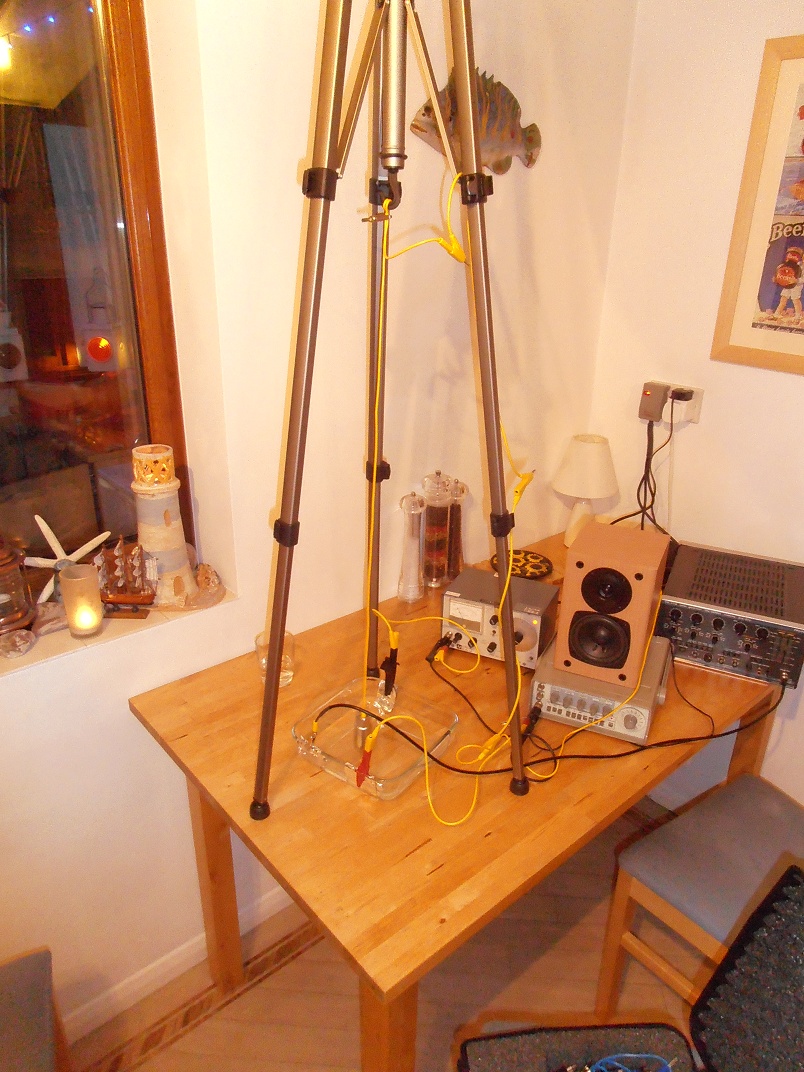
Flux Reversal GUI   This week’s little delight I’ve called Flux Reversal and felt like a blue one to me.   This evolving little number was made with a blend of several layers including three warm gently overdriven tube signal generators, a series of reversed glassy digital hybrid bells and three analog waveforms from old signal generators mixed in a super smooth sequence using a pendulum orbiting in a bath of brine water!  The latter setup I call The Water Mixer and often makes bystanders raise their eyebrows when they catch sight of various test leads and old lab equipment hooked up to a baking tray full of salty water!!…  Things your mom told you never to do – like sticking a knife in the toaster… which, knowing me, I probably tried as a kid! (you forget such events as an ever tinkering electronic engineer after over 30 years of this kind of thing!)…

WaterPendulumMixerThis one works well on it’s own but also sounds rather nice played together with sustained diallings of Anthem Keys…

Triple Tube OscillatorsThere is something quite special about 1960’s tube signal generators.   My good friend Stephen Howell (Hollow Sun) has also picked up on this – how can mixing three free running tube generated sinewaves together sound so sweet? – but they do and whatever is happening is almost impossible to see even when viewed side by side with more modern offerings. Naturally then feeding the results through a gentle tube overdrive adds a slice of sonic magic 🙂

Some 8-bit digital goodness was also used in the making of this one – a curious multi-sampled reversed bell like effect but I couldn’t resist feeding the results hot through one of my active tube EQs.

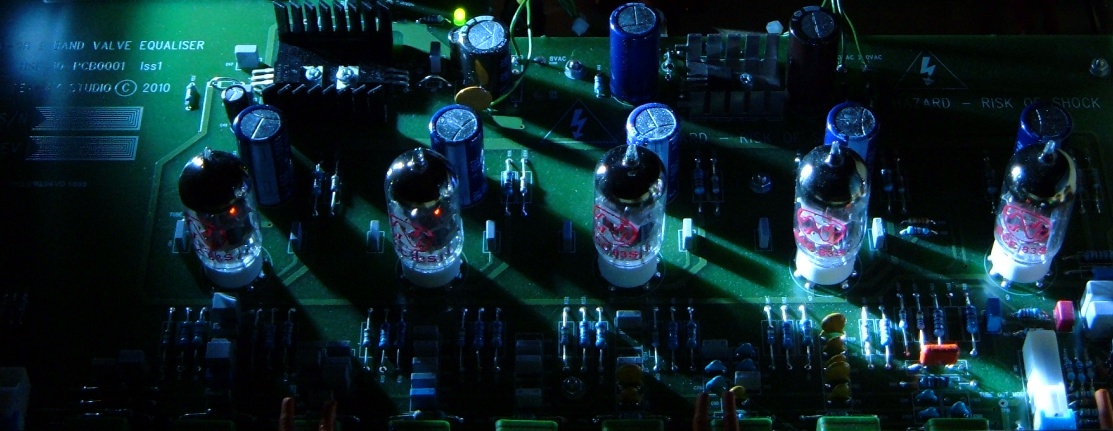
A 10 triode design of mine, the active tube EQs have been secret weapons in my sound design for some time now are very different beasts to most semi-passive offerings to be found…

Type TEQ-9B Active Tube EQ inout

Credits

D.A. Wilson (Hideaway Studio) Equipment Design, Sound Design, Sample Set, Example Patch & Demo

Stephen Howell (www.hollowsun.com) GUI Concept, GUI Design & Graphics.

Mario Krušelj Synth Engine Script


“Sounds absolutely stunning! Icy but yet emotive and melancholic at the same time.  Have just bought all 4 from the series and can’t wait to hear what you come up with next!”  ScarKord, KVR Forum

“I love them coming in such affordable bite-sized bits and pieces. It’ll be cool building up a collection of great, unusual sounds. Keep up the good work!   Just bought the lot.!”  Vicshere, KVR Forum

A Quick Demo: Kontakt 4.2.4 or later required...

HideawayStudioLogoHS-4KL-BZ04 (01/02/13)

Two New Additions to The Blue Zone Series…

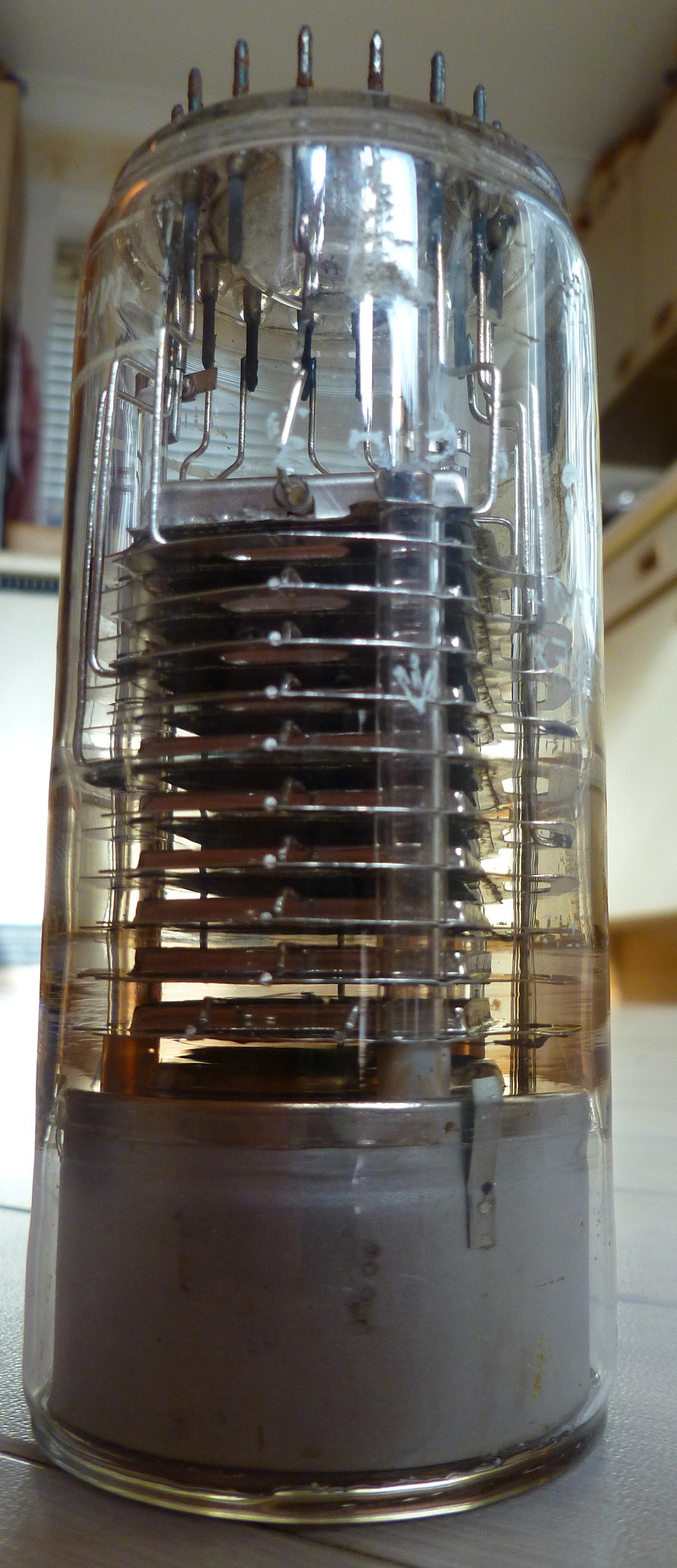
1965 EMI 6097 Photon Multiplier 

An Improved GUI….

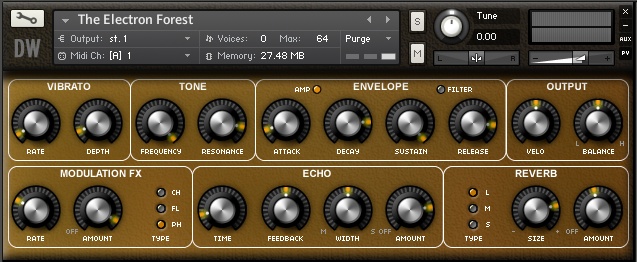
Before I introduce the new additions may I say many thanks to all who have purchased The Blue Zone.  After some user feedback Stephen and Mario very kindly offered to update the GUI to include a filter envelope and a filter amount control.

There are now two small yellow buttons, one on either side of the ENVELOPE control.

By clicking on AMP you can set the VCA envelope and by clicking on FILTER you can set the filter envelope.  The controls will move to their previous positions when switching between each mode.

The filter FREQUENCY and RESONANCE controls are still present in VCA mode

The FREQUENCY and filter ENV AMT controls are present in FILTER mode for adjustment.

As before, all control positions will be preserved if the .nki file is saved but please remember to use a new file name to avoid overwriting the original.


TheElectronForest

The Electron Forest is the second release in the Blue Zone Series.  It was made by mixing the hand cranked output of two 1960’s tube sinewave generators running well above the audible range (60 to 100kHz).  This produced upper and lower sidebands, the lower being in the audio range.  This was passed through a tube EQ resulting in a super smooth superheterodyne effect much like tuning an old AM radio but with no extraneous noise.  The Theremin works on a very similar principle.

Superhet IIA long recording was made and then several random round robin loops were setup in the instrument.

You will have noticed that The Electron Forest GUI is ochre in colour.  The idea is that the instruments in The Blue Zone Series will be colour coded:

BlueAmbient / New Age / Washes & Synthetic Textures   Ochre: Sound Effects   Red: Synths 

More GUI colours / timbres may be added over time.

The Electron Forest Played Live…

The Electron Forest & The Blue Zone Together…

And a further addition to The Blue Zone Series….  Anthem Keys

Anthem Keys

Anthem Keys… made with 3 layered tube overdriven PWM waves presented in octaves.  Adding a rapid filter envelope results in synth chime type timbres and warm pads with slower envelopes.

Two example patches and a multi are provided with the instrument.


Anthem Keys (the layered multi provided with the instrument in action)…

Credits

D.A.Wilson (Hideaway Studio) Oscillator Capture & Wave Shaping, Sample Set, Example Patches & Demos

Stephen Howell (RIP) (www.hollowsun.com) GUI Concept, GUI Design & Graphics.

Mario Krušelj Synth Engine Script

Usage Restrictions & Copyright Notice (see below)

HideawayStudioLogoHS-4KL-BZ02 & HS-4KL-BZ03 (26/01/13)

A New Series for Kontakt by Hideaway Studio – The Blue Zone…

The Blue Zone UI

A New Series of Unique Sounds & Textures…

The Blue Zone is a new series of one-off experimental electronic textures and instruments presented with a simple user interface to be periodically interspersed between major releases (there is indeed much work in progress on a new project!).  The plan is that they will eventually form a unique library of more exotic sounds available in single inexpensive installments.

Most of the sounds in the collection will be exclusively created from scratch using combinations of custom tube hybrid equipment, experimental circuits and vintage analog gear.  I have named the first installment after the series, The Blue Zone…

This wispy number was created by three modulated and detuned ramps fed hot into the Dual Tube Hybrid Filter with both the Tube and Multi-Mode stages dancing about self resonance.  The filter cutoffs were hand cranked in unison via a modulation matrix in and out of the harmonic resonance points and the results passed through an analog chorus and sampled in 24-bits.

“A cool producer tool to have in hand when background/soundscapes/tapestry is needed”  Numanoid, KVR Forum

The first installment is now available for download complete with a great GUI by Steve Howell (Hollow Sun) & Mario Krušelj.

Dual Tube Hybrid Filter and Matrix_lr

The Dual Tube Hybrid Filter – One of Only Two Examples in the World

HS-4KL-BZ01b (26/01/13)