New To The Blue Zone Series: Chopped Chymes…

Chopped Chymes GUIChopped Chymes is this weeks addition to The Blue Zone Series.  It comes in the form of three instruments… Cosseted Organix is a warm dual layer of a phased organ patch I recently programmed on the Omega 8.  This was washed through a stereo analog chorus and tube EQ and one layer tape processed on the Copicat.   Woodstock Chymes consists of several acoustic recordings of a Woodstock wind chime being struck and the results fired off, round robin, via the arpeggiator.   Phased LFO chopper is a feedback effect passed through a Small Stone Phaser and several random round robin starting points fired off by the arpeggiator throughout the natural phaser cycle.  All three work together quite nicely in any number of combinations…

Chymes

HS-4KL-BZ18 (07/08/13)

New to The Blue Zone: Oil Can Overdrive

TBZ Oil Can Overdrive GUI

It seemed right making this a red one….

Oil Can Overdrive is the latest addition to The Blue Zone Series.  It was made by feeding an X’mod patch from Minimoog 7751 hot into my recently fixed up 1960’s Echo-Reverb Electrostatic “Oil Can” tube delay along with a hand cranked tube generated sine wave to create a feedback effect and the result fed into a Watkins Copicat tape delay. There is a hell of a lot of tube/analog generated magic going on here!!..

Tube Delayed Overdrive Chain

Credits

D.A.Wilson Equipment Restoration, Sound & Patch Design

Stephen Howell GUI Design & Graphics

Mario Krušelj TBZ Engine Script

HS-4KL-BZ17 (28/07/13)

HideawayStudioLogo

Hideaway Studio Proudly Presents… Constellation: Apollo 203A

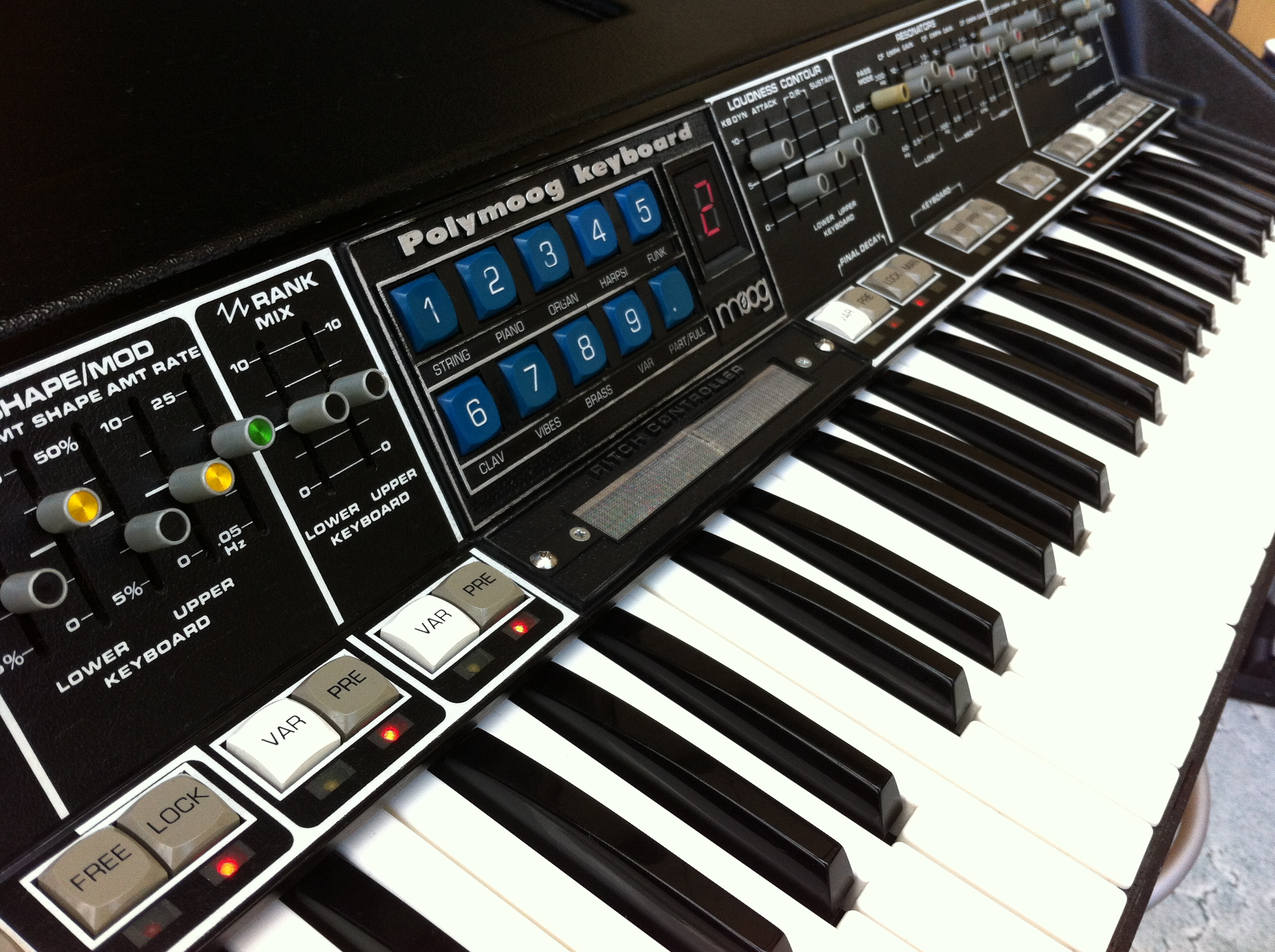
Constellation Apollo 203A GUIConstellation: Apollo 203A was in many ways a celebration of yet another successful resurrection of an old classic saved from the grave… This time it was a 1976 Polymoog model 203A most definitely rescued from a fate worse than death!…  she could have become a coffee table! Well ok, maybe not…

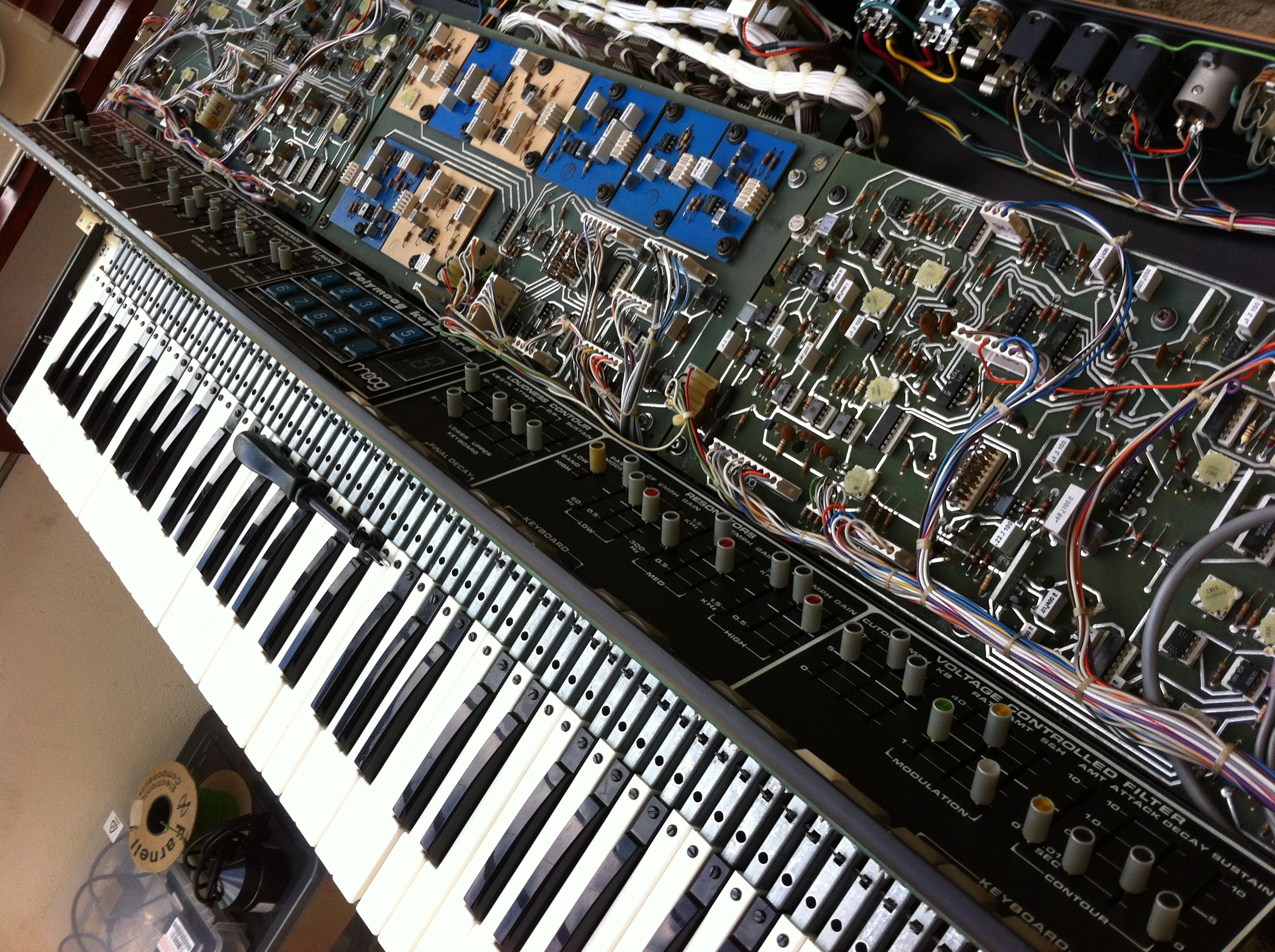
In a similar manner to Monopolyphonix I really didn’t want to sample the poor beast to death simply to produce another virtual offering so instead I captured over 500 samples directly from No.3211’s mix output, often a sample per key, and set about trying to make something a little different.   To add to the mixing pot I sampled a number of patches I’d recently created on my SE Omega 8 which I thought was kind of fitting in a way as it almost felt like a celebration of the last 30+ years of polyphonic synthesis.   In order to make the two sing a little more sweetly together I decided to wash the Omega through an old analog stereo chorus unit and a tube equaliser.

Polymoog 203A  No3211

Stephen Howell (Hollow Sun) and Mario Krušelj really outdid themselves this time with a superb GUI based on the 4-voice layering engine but now complete with independent velocity sensitivity controls on each channel…

More Details & Purchase via Kontakt Hub

Download Contents: 660Mb library  for Kontakt 4.2.4 and above, 551 Samples in 24-bits, 24 multi-sampled voices available in 4-Voice layering engine with ability to save patches, 32 Demo patches, 16 Demo Multis, Demo & User Manual with more on project background.

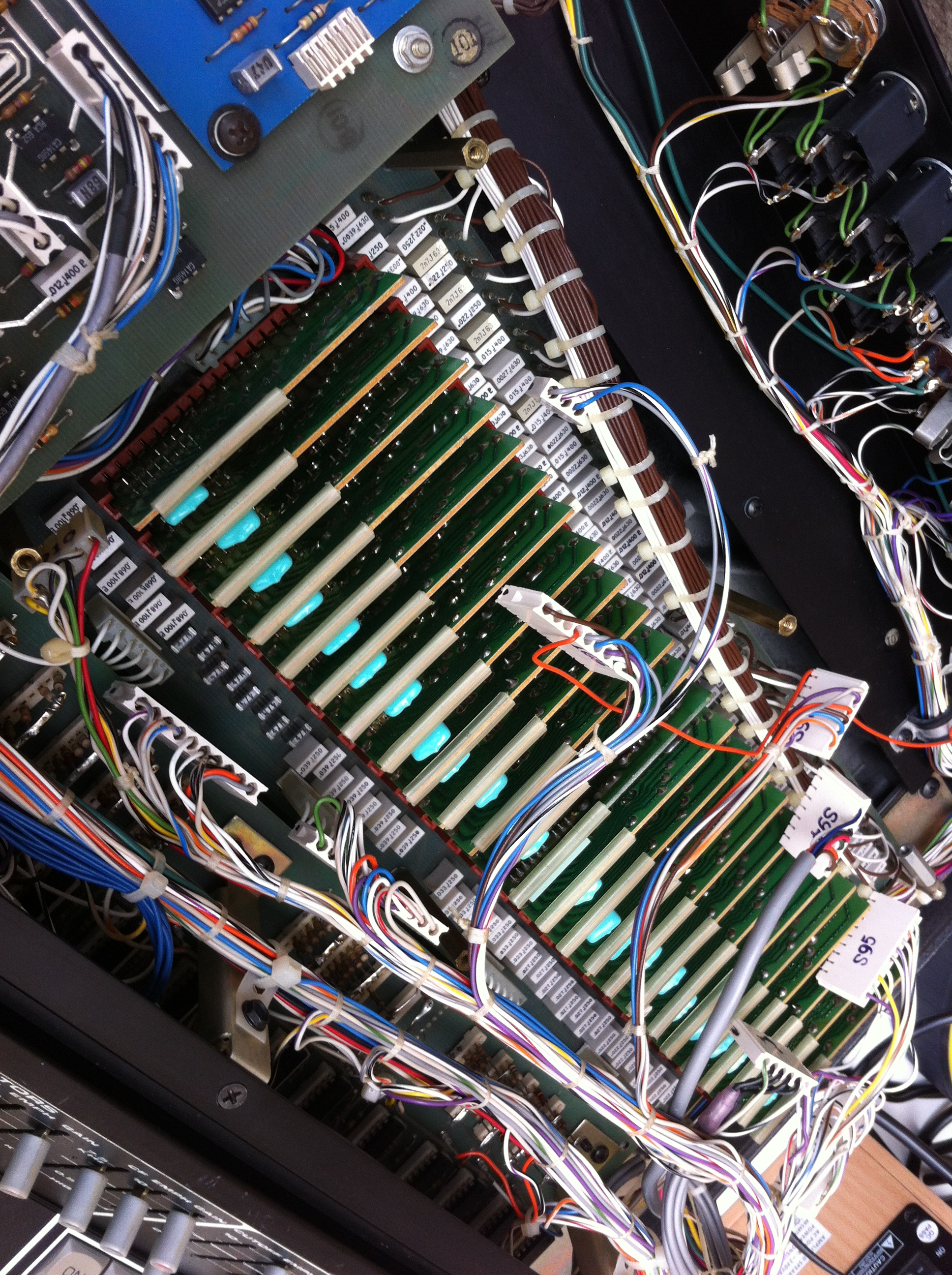
PM3211 Polycom CardsHS SE_Omega 8 Guts

Credits:

D.A.Wilson Sound, Patch Design & Demo

– Stephen Howell GUI Design & Graphics

Mario Krušelj GUI Script

HS-4KL-A008 (14/07/13)

HideawayStudioLogo

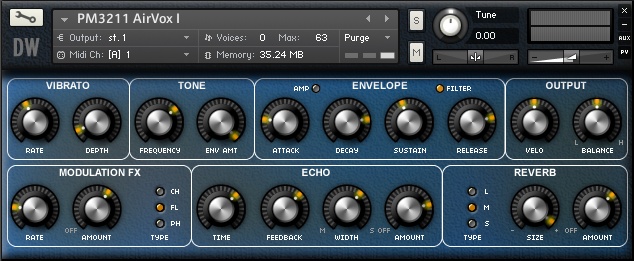
A New Addition to The Blue Zone: PM3211 AirVox

PM3211 AirVox GUIPM3211 AirVox is a celebration of the return of yet another old gem to the living world.  This time it was 1976 Polymoog #3211 recently acquired by the musical genius that is Will Gregory of Goldfrapp.   Rescued from the US as a very dead but promising example I set about an intense couple of weeks breathing life back into her.   Some 45 CMOS chips, 37 LEDs and a retrofitted switched mode PSU later along with a deep cleanse resulted in sound – glorious sound!..

PM3211 AirVox is the 1st multi-sample to be captured from #3211 with Will’s kind permission and includes 3 demo instruments and 3 multis…


Polymoog 3211a
 Polymoog 3211c

HS-4KL-BZ16 (29/06/13)
Kontakt 4.2.4 and above.

Hideaway Studio Presents: The Cosmic Music Box…

The Cosmic Music Box GUIThe project started off by acoustically recording 21 tine actuations from a disassembled music box mechanism placed on a wooden sounding board using both conventional condenser and contact microphones. The sound of the clockwork motor and air brake mechanisms was also captured. A synthesized halo effect was created to blend with the tines by capturing several beating sine waves from a 1960’s tube based dual tone generator which were fed through the filter stages of a Minimoog with the filter in near resonance.

A user interface was devised to implement a randomised delay feature between two groups of acoustic tine instruments to create a plink effect and to blend the halo and motor effects together to form The Cosmic Music Box

A second page was developed to permit the user to dial in various effects such as chorus, phaser, delay and reverb…

Download Contents:The Cosmic Music Box

-51 Samples
-Cosmic Music Box GUI
-5 Example Instrument Patches
-User Manual
-Demo

More Details & Purchase via Kontakt Hub

Credits:

D.A.Wilson Sound, Patch Design & Demo

– Stephen Howell GUI Design & Graphics

Mario Krušelj GUI Script

HS-4KL-A007 (15/06/13)

HideawayStudioLogo

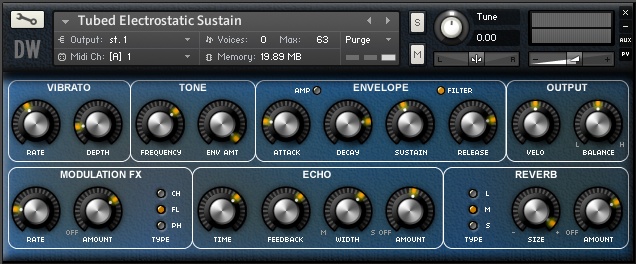
A New Addition to The Blue Zone Series…

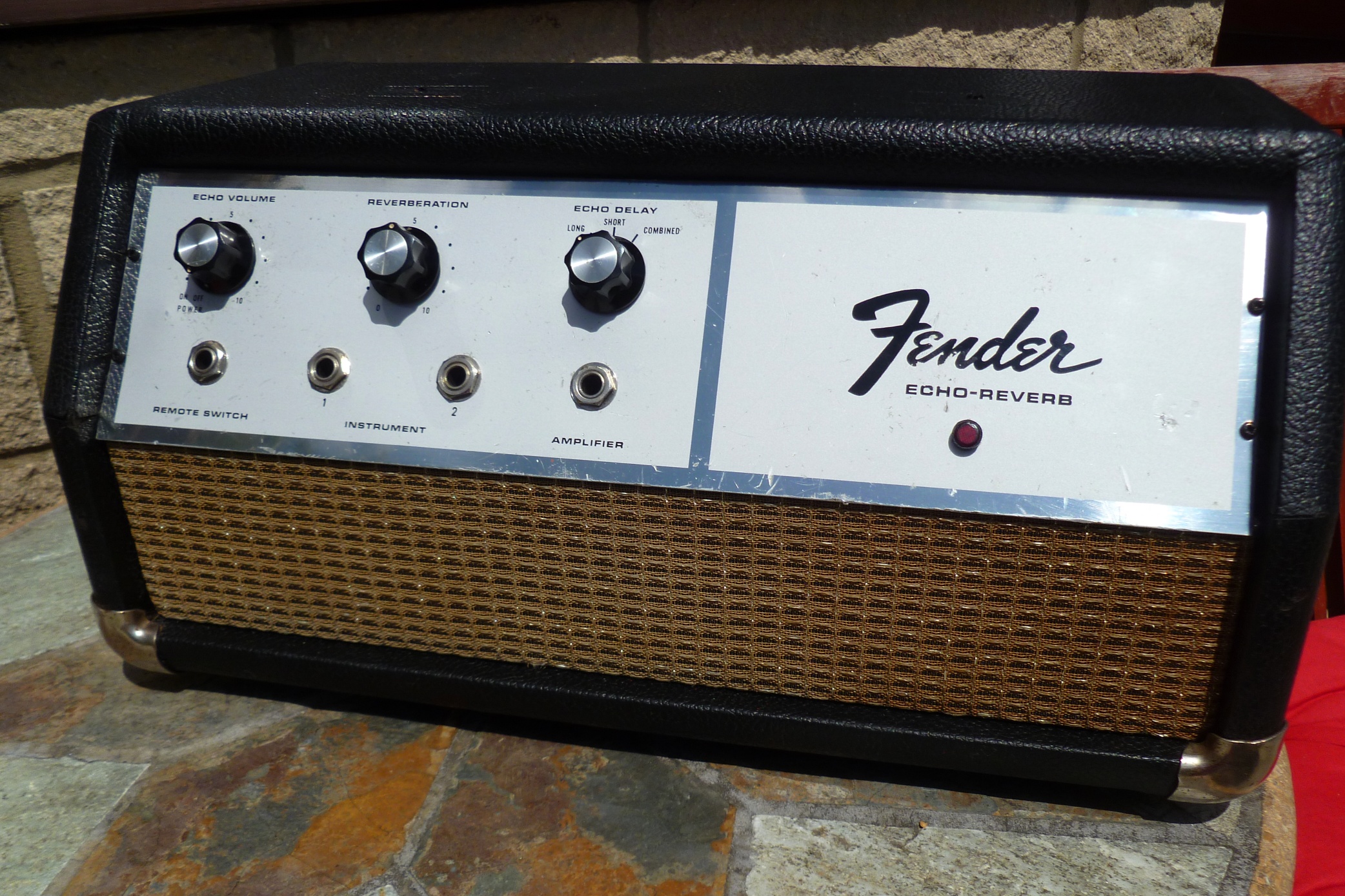
Tube Elec Sust GUI Tubed Electrostatic Sustain is my first to be created using a wonderful 1966 Fender Echo-Reverb tube electrostatic “oil can” delay which I recently fixed up.   This bizarre old technology creates a delay by writing an audio signal in the form of a continuously varying electrostatic charge onto a rotating metal disk (like a photocopier) which sits in a bath of dielectric oil – hence the name “oil can delay”.   The technology was developed by Tel-Ray and is just about as analog as it ever gets with its overdriven tube preamp and wonky belt driven disk.

The instrument was created by overdriving the tube stages with several cycling PWM waves from a CS01 synth.


Echo Reverb

Credits

D.A.Wilson Equipment Restoration, Sound & Patch Design

– Stephen Howell GUI Design & Graphics

Mario Krušelj TBZ Engine Script

HS-4KL-BZ15 (09/06/13)

HideawayStudioLogo

A New Addition to The Blue Zone Series: Triple Phased Halo

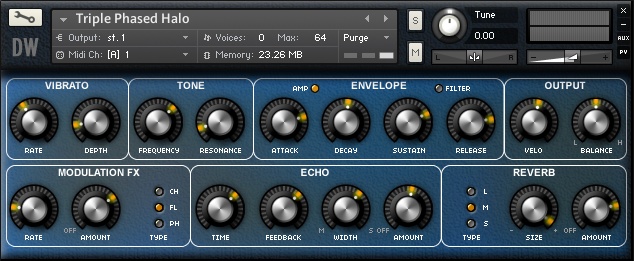
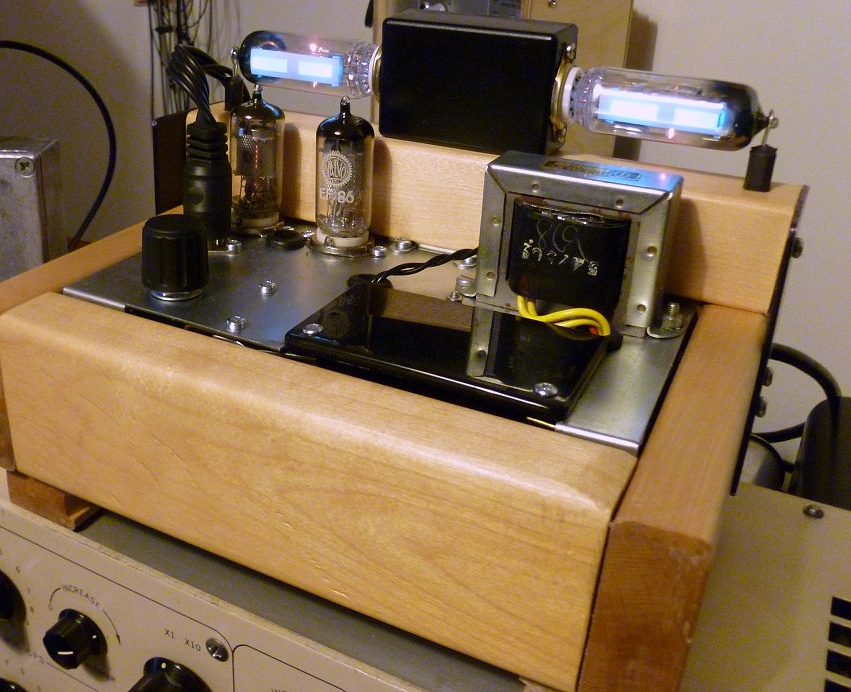
Triple Phased Halo GUITriple Phased Halo is the latest addition to The Blue Zone Series for Kontakt 4.2.4 and above. It was made with two tube generated bell ratios each created by feeding mixed dual sine waves from a 1960’s tube infested Panoramic Two Tone Generator fed hot into the Minimoog’s external input with the filter running in self oscillation at a fixed ratio.  The results were passed into the Triple Tube Hybrid Phaser and a number of loops created in Kontakt…


Triple Tube Hybrid Analog Phaser_Internal

Credits

D.A.Wilson Equipment, Sound & Patch Design
Stephen Howell GUI Design & Graphics
Mario Krušelj TBZ Engine Script

HS-4KL-BZ14 (02/06/13)

HideawayStudioLogo

An Atmospheric New Offering for The Blue Zone Series: After Dark

Afterdark GUIsAfter Dark is the latest atmospheric addition to The Blue Zone Series for Kontakt 4.2.4 and above. It comprises of 4 multis and 7 instruments made with several pieces of cherished gear in the studio including the Minimoog (FM plucks), a Studio Electronics Omega 8 (xmod bells), and two high frequency 1960’s tube signal generators mixed to form an audible superheterodyne effect similar to the Theremin…

Below is a quick improvised demo of the 4 multis bundled with the release in action:

Ice Fields… a cold place..
After Dark… a frightening place!.
Temple Pings… a spiritual place..
Blue Halo… a warm place..


Omega8 Blood
Credits

D.A.Wilson Sound and Patch Design
Stephen Howell GUI Design & Graphics
Mario Krušelj TBZ Engine Script

HS-4KL-BZ12 (18/05/13)

HideawayStudioLogo

Hideaway Studio Proudly Presents: The String Collection…

Warm Evocative Synth Strings….
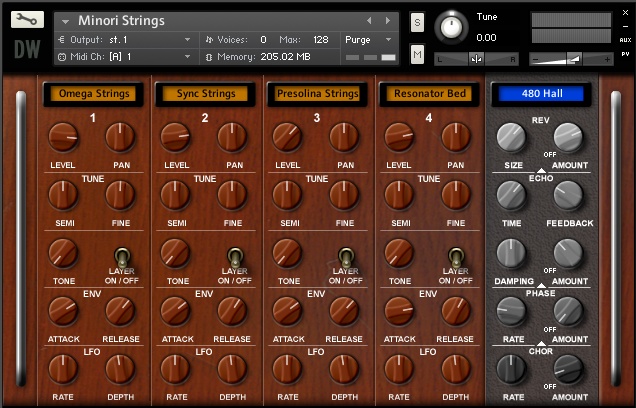
 The String Collection GUII have always had a bit of a soft spot for evocative cinematic synth strings and especially pseudo realistic string ensembles. Probably as a result I’ve almost subconsciously amassed (and sometimes restored) a small collection of historically important string synths over the years and found to my delight that they blend and layer very nicely with one another. These include my 1938 Novachord, arguably the world’s first polyphonic string synthesizer, the 1972 Eminent 310 Unique which features an early incarnation of the Solina Strings and its direct relative, the ARP Omni. I have also been playing with a number of discrete methods to generate exponential sawtooths, passive tube buffered L/C formant resonators, analog chorus circuits and tube processing. The way most of these early polyphonic instruments worked was very different from the later voltage controlled synths and they very much have a tone and texture of their own. The triple parallel analog BBD based chorus stages with multiple free-running LFOs on the Eminent 310 and Solina alone are significantly more lush and complex than the single stage chorus sections found on later synths. A number of tube processed layers and blends were brought together to form the basic 16 instruments loaded into the layering engine to form the The String Collection…


“This instrument is really made with the creative musician in mind , simple , efficient, reliable and inspiring…”   Claude Samard-Polikar Musical director, musician and arranger for Jean Michel Jarre and award winning film/video games composer. www.claudesamard.com

“I have Gforce VSM, K8U, Synth Magic, Tronsonic, etc. But after playing the demo song against a few of my fav’s, I feel like hideaway really has its own identity and spin on a familiar territory. I like the sound of its playability. It just works! Check it out.”  KK, Chronic Audio NYC www.chronicaudionyc.com

“Just to let you know – I hate you.  I was really only going to look at your page and admire the work.  Suddenly my mouse started clicking away.  Now I have spent all my “play” money and part of my food allowance.  Expect me for dinner at some point if I can ever get away from my computer.  This stuff is just Gorgeous!”  hueynym, KVR Forum

“This is startlingly beautiful! Well done – it’s a privilege to own such a great collection of synths, and I’m happy you share them with the world. I love the sound of real orchestras, but there’s something about the synthetic voices of the 1960s and 1970s that really works well with modal and minor key pop music.”  Ray Savage

“Thanks so much for yet another great sounding, great looking and very cleverly programmed instrument! The price is equally great.  11 stars (of 10)…”  Tpot, KVR Forum
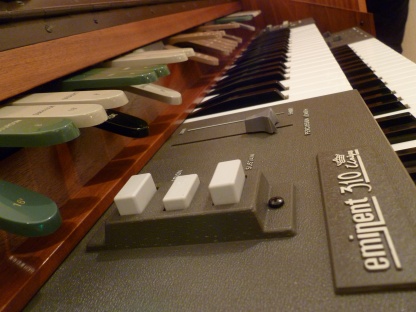
Hideaway Eminent 310U

More Details & Purchase via Kontakt Hub

Download Contents:

•244 generously long 24-bit samples
•16 multi-sampled voices/partials
•4-Voice Layering Engine with ability to save
•12 editable example instrument patches
•2 example layered multi patches
•User Manual

System Requirements:

•Requires Kontakt version 4.2.4 or higher
•Around 600Mb Free Hard Disk Space

Credits

D.A.Wilson (Hideaway Studio) Sound Design, Sample Set & Example Instruments. Stephen Howell (Hollow Sun, RIP) Layering Engine Concept, GUI Design & Graphics. Mario Krušelj Layering Engine Script

HS-K4L-A006 V1.01 05/05/13HideawayStudioLogo

© D.A.Wilson, Hideaway Studio 2013

This Week’s Addition to The Blue Zone Series…

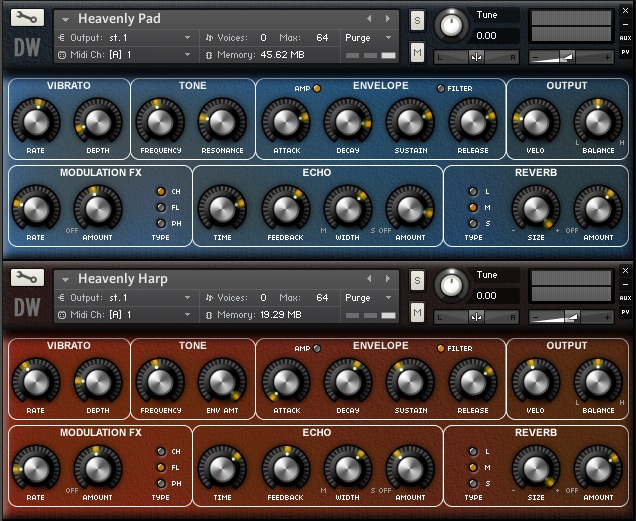
Heavenly One GUII spend a lot of my time restoring and revamping old studio gear and it’s often nice to celebrate the return of an old faithful with a sample or two. This 1985 Crumar Bit One was somewhat distressed when it arrived with several broken keys and had a habit of crashing until numerous contacts were cleaned. The Bit One was designed by Mario Maggi, the same creator as the mighty Elka Synthex. Although the Bit One was significantly less feature rich, it was still an interesting offering with its dual free-running master oscillators featuring a variable detune control and Curtis filters. One area this slightly odd beasty excels at are plucked instruments thanks in part to the phasey/edgy results of setting the detune control to just off zero. The shifting phase effect between each bank of oscillators on each key-on is often cited as a shortcoming… I really rather like it!  Although the Bit One is not everyone’s cup of tea I have found its qwerks quite endearing.

BitOneRevampedHeavenly One comes in two parts… Heavenly Harp is a large multi-sample playing on the effects of the Bit One’s shifting phase and Heavenly Pad is a cyclic phaser pad using a blend of eight instruments which have been processed with the Dual Pentode Buffer and I think the two work nicely together as a multi.

DualPentodeBuffer

 HideawayStudioLogo

HS-4KL-BZ11 (21/04/13)